
Taxi operators already have the hardest asset to build: vehicles, drivers, and local market knowledge. The challenge is turning that physical network into a digital booking channel that consistently brings in customers without depending entirely on third-party platforms.
A Lyft clone can give taxi business owners the technology to build that channel under their own business model.
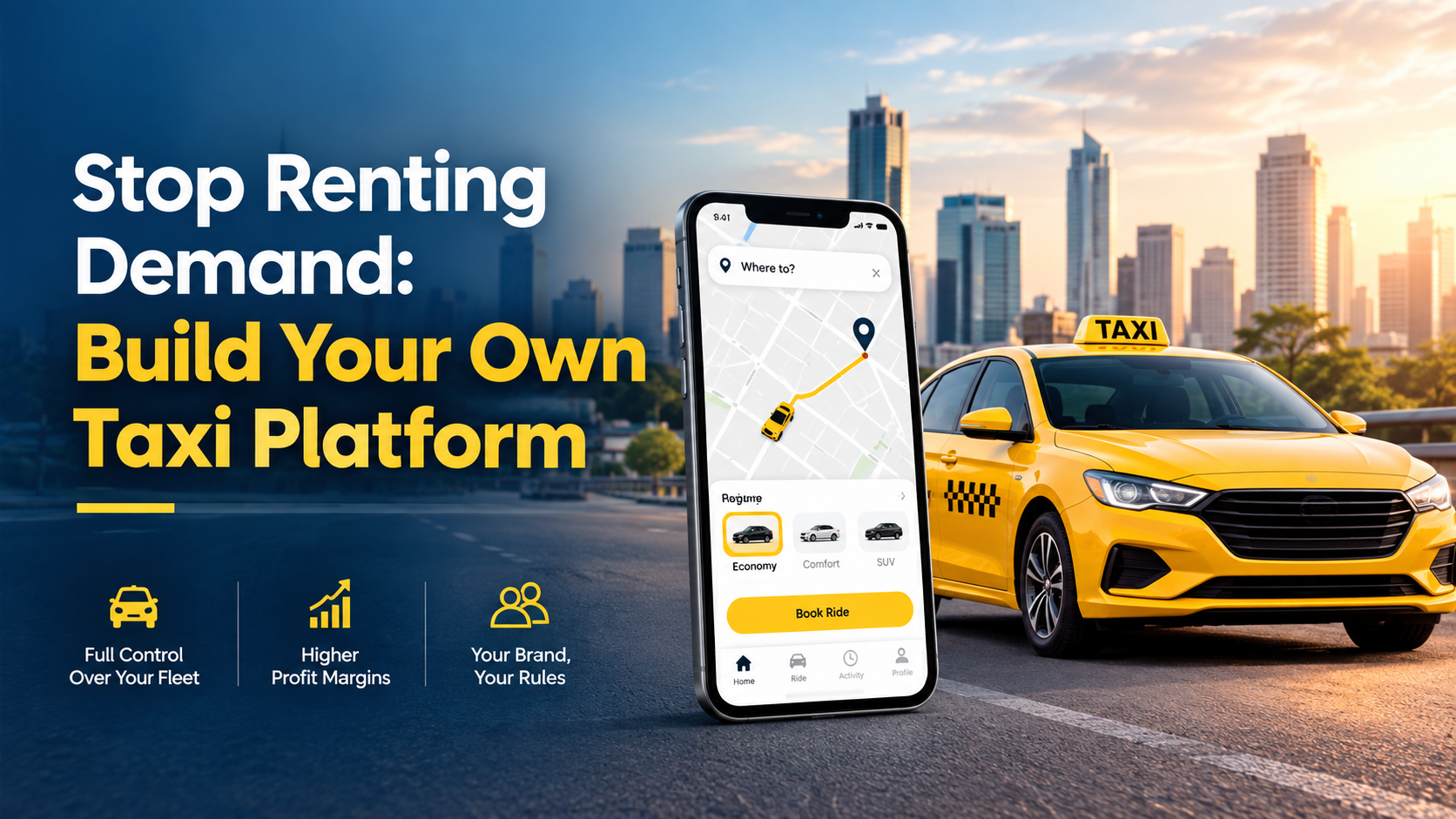
Instead of sending customers to an external marketplace, operators can provide a branded platform where customers book rides directly, select vehicle categories, receive live ETAs, make digital payments, and communicate with drivers. The business retains greater control over the customer relationship while managing its fleet from a centralized dashboard.
This becomes particularly relevant as taxi businesses compete with app-based mobility platforms that have raised customer expectations around speed, convenience, tracking, and payment flexibility.
The opportunity is not simply to “have a taxi app.”
It is to digitize the taxi operation you already own.
Lyft Clone App Development for Taxi Fleet Owners
For a taxi company, technology has to solve operational problems—not just provide an attractive booking interface.
A purpose-built Lyft clone app can connect customers, drivers, dispatchers, and fleet administrators through one system.
For example, the admin dashboard can provide visibility into active trips, available drivers, completed bookings, cancellations, earnings, and vehicle utilization. Dispatch teams can assign or automate trips based on driver location and availability, reducing unnecessary coordination through phone calls and messaging apps.
Drivers can use a dedicated application to receive trip requests, navigate to pickup locations, update ride status, and monitor earnings.
Customers, meanwhile, get the experience they now expect from modern mobility platforms: upfront fare information, driver details, live tracking, digital payments, booking history, and notifications.
For taxi owners, the bigger benefit is control.
Instead of building the business around another company's customer acquisition channel, operators can develop their own booking ecosystem.
Build Direct Demand Instead of Renting Customer Access
Third-party ride marketplaces can help taxi operators generate bookings, but they can also create dependence on external platforms, pricing structures, commissions, and customer relationships.
A branded taxi booking platform creates another route.
Existing customers can be encouraged to book directly through the company's application. Hotels, businesses, travel agencies, event organizers, and local partners can potentially be connected to the same booking infrastructure.
This creates opportunities to build recurring demand rather than relying exclusively on individual street-level bookings.
Taxi companies can also introduce different commercial models according to their market. These may include standard rides, airport transfers, scheduled trips, corporate accounts, premium vehicles, hourly bookings, or contract transportation.
The technology should make those services manageable from the same operational backbone.
From Taxi Fleet to Local Mobility Platform
The next growth opportunity for established taxi businesses may not be adding hundreds of vehicles immediately. It can be using existing fleet capacity more intelligently.
Real-time fleet visibility can help identify underutilized vehicles, busy service zones, high-demand periods, and driver availability patterns. With these insights, operators can make more informed decisions about where and when to deploy their fleet.
A modular platform can also allow a taxi company to expand later into adjacent services without rebuilding its entire technology stack.
Airport transfers today could become corporate transportation tomorrow. Scheduled rides could evolve into recurring business accounts. A local taxi fleet could gradually become a broader mobility operation.
That is where a Lyft clone becomes more than a booking application.
It becomes the digital infrastructure behind the taxi business.
Why Taxi Owners Should Think Beyond the App
The competitive advantage will not come from copying another company's colors, screens, or booking flow.
It comes from building technology around your fleet, your drivers, your customers, and your local demand.
A taxi business with its own digital booking channel can experiment with pricing, promotions, loyalty programs, corporate partnerships, service zones, and new transportation offerings while maintaining control over the underlying customer experience.
For established taxi operators looking to modernize, and fleet owners planning to compete in app-driven mobility markets, a scalable Lyft clone app can provide the foundation for that transition.
Own your bookings. Manage your fleet. Build your customer channel. Talk to SpotnRides about creating a Lyft clone tailored to your taxi business.



 English
 French
 Deutsch